 Bardney · Southrey · Tupholme · Bucknall
The Quiet Door and the January bills.
By Darren Wilkinson, Treasurer · · 8 min read
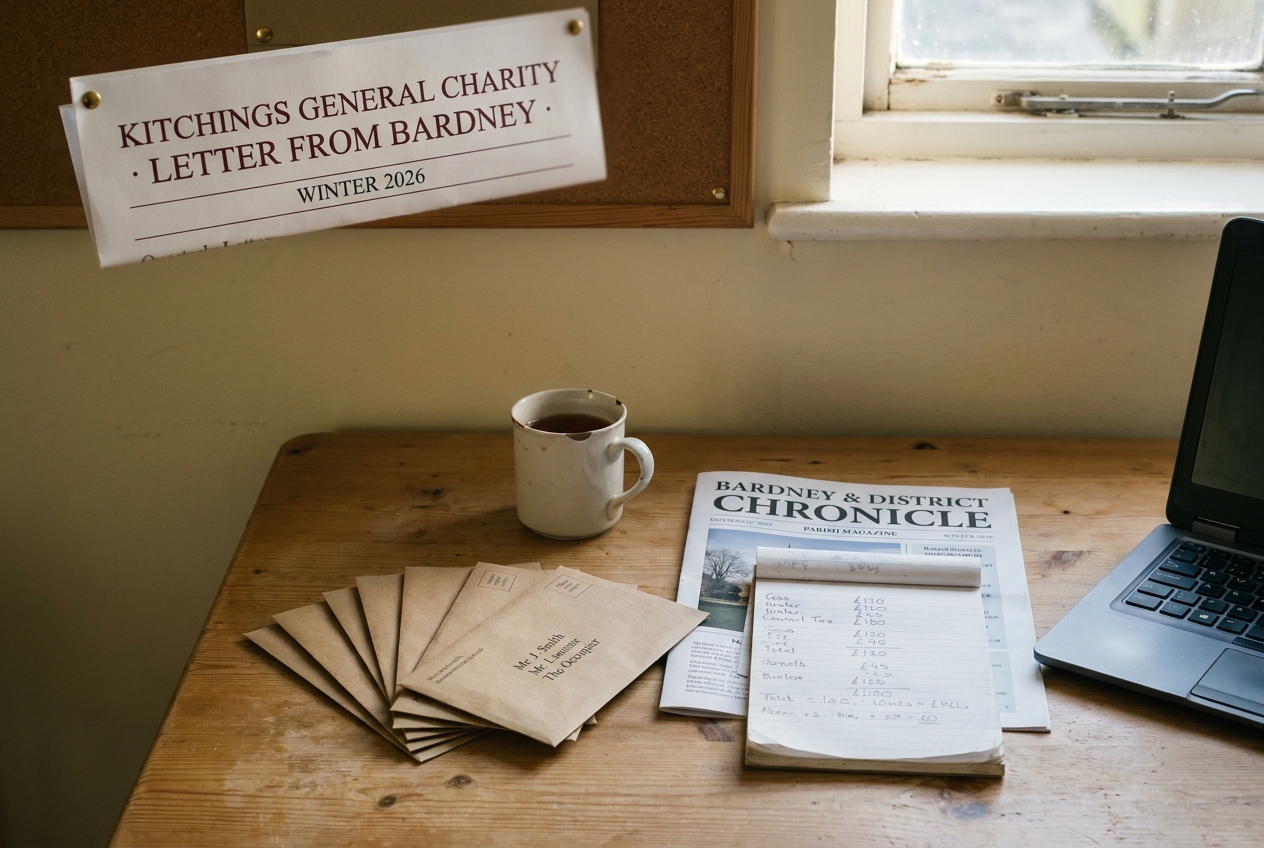
January is the quiet month at the parish hall. The Christmas-fair signs have come down, the schoolchildren are back at their desks, and most of us have settled into the small habits of a Lincolnshire winter. But for the trust it is among the busiest months in the year. The Quiet Door — our emergency reserve, for the cases that cannot wait until the next quarterly meeting — opens more often in January than in any other month. This year it opened seven times in four weeks.
Some of those seven cases were the kind we have come to expect after Christmas. A heating-oil tank empty by the second week of the month, the household waiting on a benefit payment that had been delayed by the bank holiday. A school-trip deposit that fell due before the parent's first January pay packet. A funeral cost, late notification, two days before the service. These are not surprises. They are the bills that arrive after the accounts have closed for the year.
What was unusual this year was the eighth case — the one which did not come to the Quiet Door at all, and which has been on my mind since. I will be careful with the details because the household concerned would not wish to be recognised. It was a small family in one of our four parishes, with a teenager just into their first year at sixth form, where a chain of three small bills had become, in the space of ten days, a difficulty that exceeded what we are equipped to meet.
The cumulative shortfall in the eighth case was several thousand pounds. A modern Quiet Door grant — capped, with good reason, at £400 — would not have made a meaningful difference. The household needed sustained advice, formal debt mediation, and an arrangement with a creditor that we have neither the standing nor the expertise to broker. Geoffrey, in the end, walked the family to the door of a chartered debt-advice service in Lincoln. He drove them in his own car. That is the kind of help a small parish trust can sometimes provide, but it is not a grant. It is not on the books.
I have written about this because the trustees agreed at our February meeting that we should be open about the cases we cannot meet, alongside the ones we can. Quiet Door grants have a particular shape: small, fast, single-cause. They keep a heating system running through a fortnight, or pay a funeral director, or cover the deposit on a school trip while a parent waits for their pay. They are not designed for chains of debt or for households whose difficulties are structural. We can sometimes recognise a structural difficulty before it deepens; sometimes we cannot.
The seven cases we did meet.
So that this is not entirely a list of limitations — the seven cases met by the Quiet Door in January 2026:
- Two heating-oil top-ups, in Southrey and Tupholme, totalling £540.
- One school-trip deposit, in Bardney, £85.
- One funeral-flowers contribution, in Bucknall, £140.
- One emergency boiler call-out for an older couple in Bardney, £280.
- One bed-and-bedding grant for a household with a new arrival, £230.
- One small grocery voucher arrangement with the village shop in Southrey, £120.
Total Quiet Door spend in January 2026: £1,395. The trustees' cap on the fund — £3,000 across the calendar year — is therefore £1,395 of the way down with eleven months to go. We have written to a small number of donors who have previously supported the fund, and the campaign on this website is now open for the rest of the winter.
A word on the way we work.
Quiet Door grants are decided by three of the trustees: the chair, the secretary, and at least one other trustee available within seventy-two hours of the application. Decisions are reported in full to the next quarterly meeting, with the household's name anonymised in the public minutes. The trustees keep a small case file for each decision, retained for seven years.
There is no application form. There is no paperwork to be submitted in advance. A telephone call or an email to [email protected] reaches the chair within a working day. If you know a household in any of the four parishes that might benefit from a Quiet Door grant in the coming weeks, the trustees would welcome a quiet word.
And, finally, a thank-you. The Quiet Door is largely funded by small donations from people who have either received help themselves in the past, or who know someone who has. The fund's reserve at the start of January stood at £4,352, against a 2026 budget of £3,000. The cushion is small. But it is enough for the kind of work the Quiet Door is for. We are most grateful to everyone who has kept that small cushion in place.
Filed under: Quiet Door, January, the limits of small grants.
The accounts referenced above will appear in the 2026 annual report.